
Wieland wanted to increase the purity of its recycled copper so it could be reused in high-grade applications. Lybover integrated Steinert’s MSort sorting technology into a total concept that, from the design stage onwards, took process control, quality and a possible future capacity expansion into account.

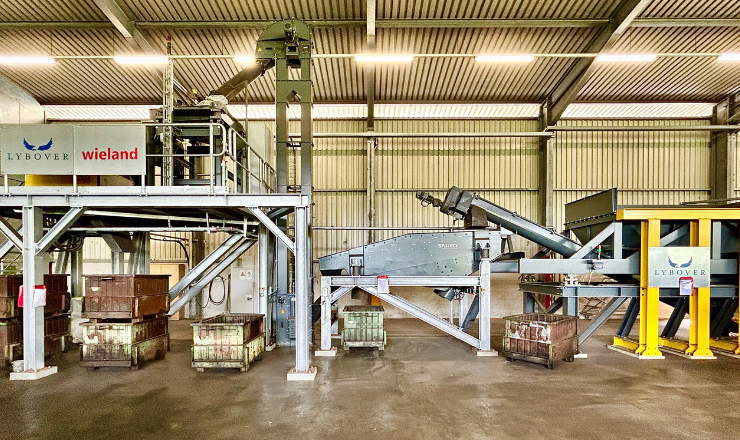
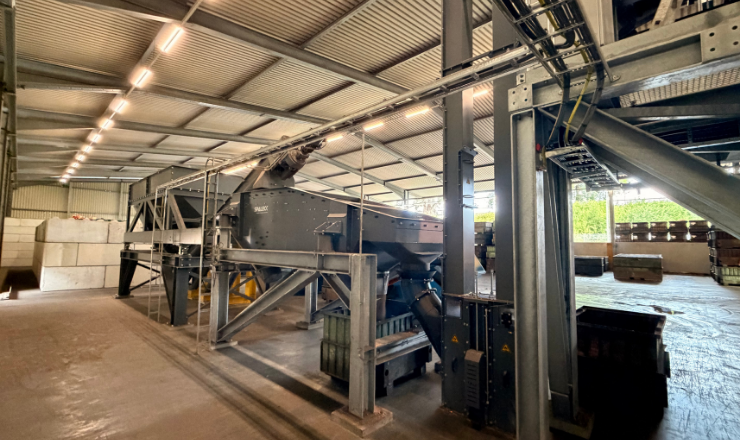
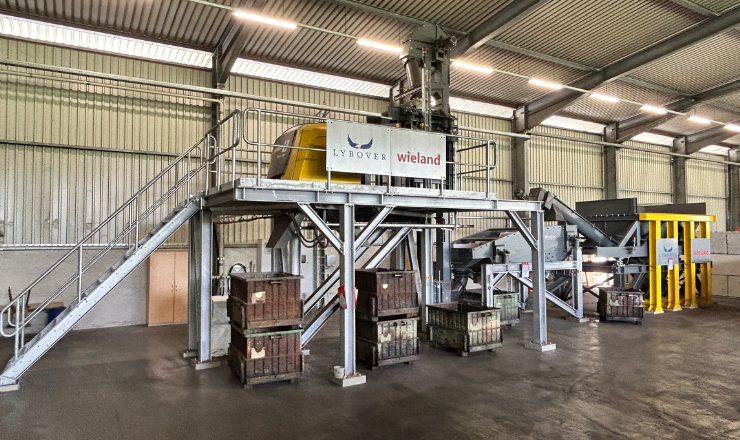
Lybover designed and delivered a complete recycling line around the MSort, including a custom-made hopper, screening installation, conveying systems and smart control for optimal use of capacity. During an extensive test phase, different copper fractions and settings were tested, with the customer closely involved in determining the optimal balance between purity and recovery.

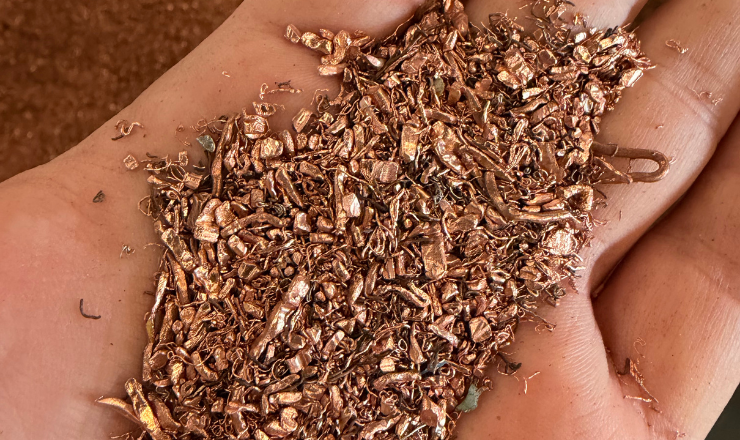
The installation achieves a copper purity of up to 99.7%. Its current capacity can easily be doubled thanks to the way the line was designed and prepared for future expansion. The result is a future-oriented and scalable solution in which advanced technology and well-considered project management come together in a perfectly aligned tandem.
Wieland-Werke AG, one of the world’s leading suppliers of semi-finished products in copper and copper alloys, was looking for a new copper recycling line for its site in Vöhringen, near Ulm, Germany. The company melts copper and reuses it in high-grade applications, but many scrap options on the copper scrap market do not meet Wieland’s strict quality requirements.
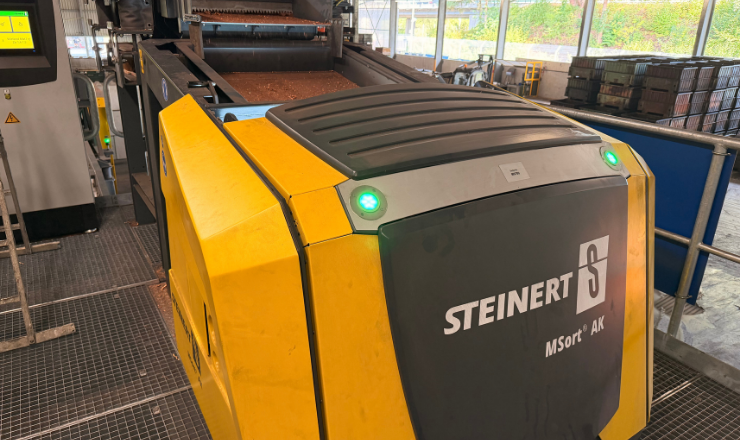
To address this challenge, Wieland explored the use of a Steinert MSort sorting machine, which uses colour detection to accurately distinguish copper from other materials and actively eject impurities, leaving a copper#1 fraction. The technology provided the required purity level, but it called for careful integration into a complete line. For that integration, Wieland and Steinert turned to Lybover.
The plan: combining technology with smart integration
The MSort is the core of the installation and forms the basis for cleaning recycled copper containing impurities. Because the MSort can only separate copper from a particle size of 0.8 mm upwards, the line was designed around this technical requirement.
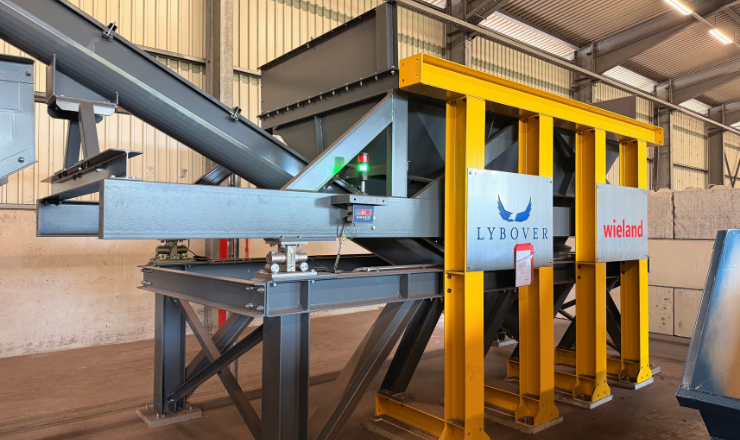
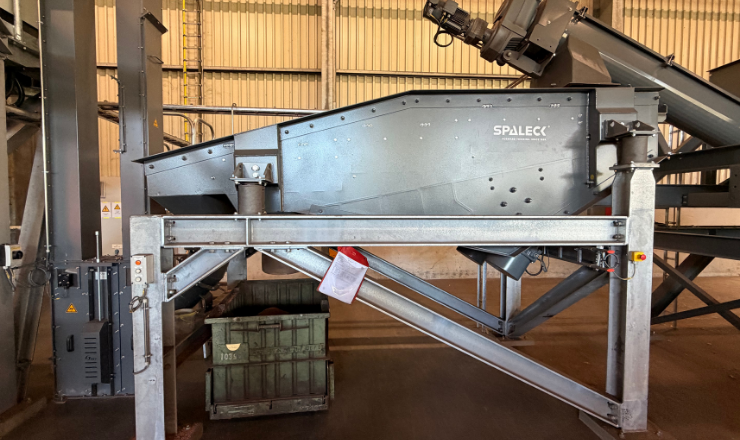
The installation starts with a custom-made hopper, equipped with weighing cells and designed by Lybover’s own production department. With a capacity of up to 28 tonnes, the hopper feeds the material via a frequency-controlled screw conveyor to a Spaleck screen, where the fine fraction (< 0.8 mm) is screened out. Smart control ensures a constant and optimal feed, adjusted to the proportion of fine material in the input. Thanks to this control, the bottleneck in the line is always fed optimally, keeping separation performance at its maximum. The coarser fraction is conveyed to the MSort via a TrennSo elevator and Spaleck vibrating tables.
The execution: testing, fine-tuning and thinking ahead
In the first phase, Lybover installed one MSort. From the design stage onwards, provision was made for a possible expansion with a second MSort, allowing the capacity to be easily doubled. The hopper, screen and elevator are fully prepared for this, both in terms of capacity and layout.
During the test phase, different copper qualities and fraction sizes were tested extensively. The customer was actively involved in these tests, allowing the team to jointly determine the optimal settings for purity and recovery.
The result: a perfect tandem
The result is a high-performance, future-oriented recycling line with a copper purity of up to 99.7%. The combination of high-quality sorting technology and well-considered project integration once again proves its value. This project is a good example of how Lybover, in close collaboration with partners such as Steinert, translates technology into a working and scalable solution at the customer’s site.